Enquiry

Determines the particle size distribution of the aggregate to ensure suitability for construction use.
Measures the shape of the aggregates. Excessive flaky or elongated particles may affect concrete strength and workability.
Indicates the toughness of aggregate or its resistance to sudden impact/load.
Represents the density of the aggregate. Used for mix design and quality assessment.
Indicates the porosity of aggregate. Higher absorption can affect water-cement ratio and concrete strength.
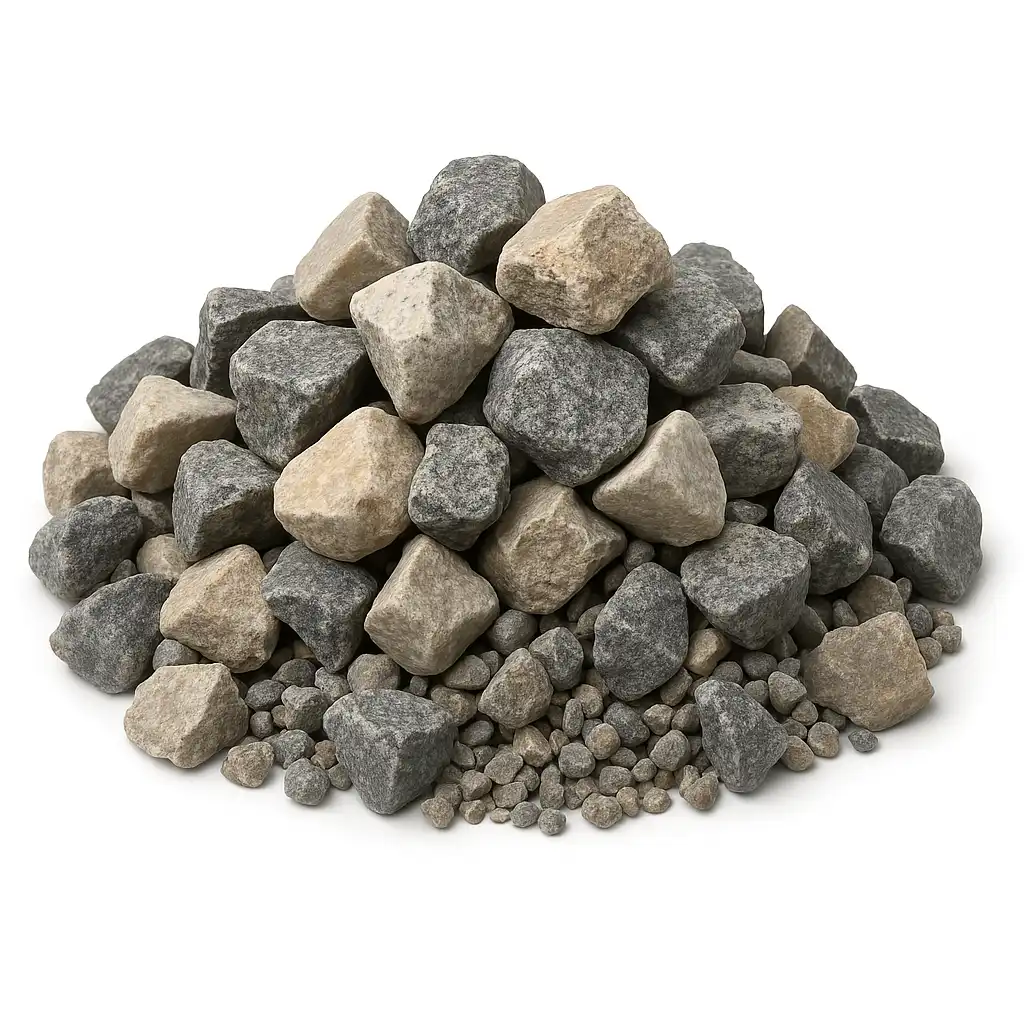
40mm size aggregates are large-sized stones commonly used in heavy-duty concrete mixes for large-scale construction projects. These aggregates are produced by crushing larger rocks into uniform 40mm particles, offering exceptional strength and structural integrity in concrete formulations.
These aggregates are typically used in the construction of foundations, roads, highways, dams, and other large infrastructure projects that require high load-bearing capacity. The larger size of the 40mm aggregates ensures that the concrete mix is dense, which significantly improves its durability and long-term performance under heavy loads.
In addition to providing strength, 40mm aggregates play a crucial role in ensuring the stability of the structure by filling larger voids between smaller aggregates, promoting better compaction, and reducing the likelihood of cracking. Their size also helps in making the concrete mix easier to manage in large pours, improving overall workability for large-scale construction tasks.