Enquiry

Determines the particle size distribution of the aggregate to ensure suitability for construction use.
Measures the shape of the aggregates. Excessive flaky or elongated particles may affect concrete strength and workability.
Indicates the toughness of aggregate or its resistance to sudden impact/load.
Represents the density of the aggregate. Used for mix design and quality assessment.
Indicates the porosity of aggregate. Higher absorption can affect water-cement ratio and concrete strength.
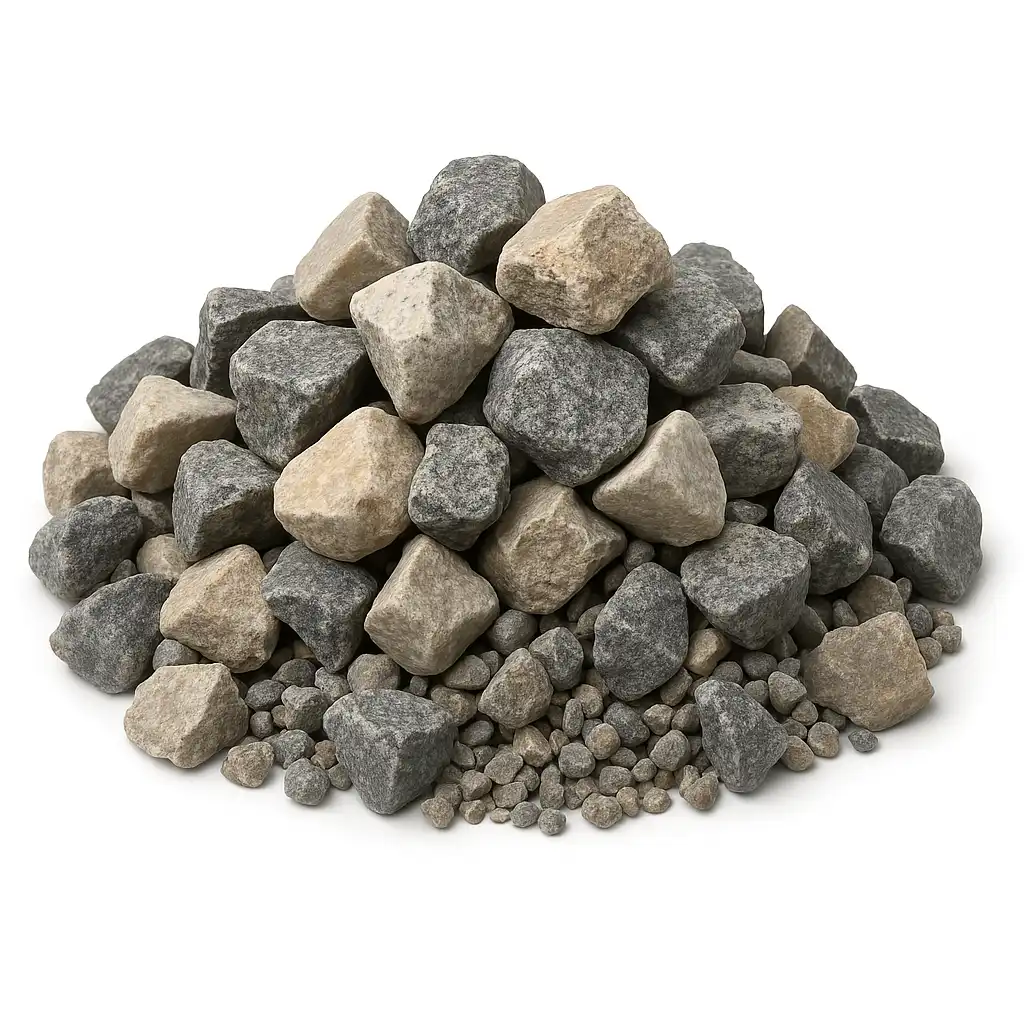
20mm size aggregates are large-sized stones commonly used in construction for making concrete mixes, especially in applications that require high strength and load-bearing capacity. These aggregates are produced by crushing larger rocks into uniform 20mm particles, providing the perfect balance between strength and stability.
These aggregates are essential for creating concrete used in heavy-duty applications such as highways, bridges, high-rise buildings, and large infrastructure projects. The larger size of the aggregates ensures better compaction in the concrete mix, enhancing its overall density and providing improved structural integrity and durability.
In addition to their role in providing strength, 20mm aggregates contribute to the concrete’s workability, allowing for easier mixing and application. Their ability to fill larger voids between smaller aggregates results in a denser and more cohesive mixture, reducing the likelihood of cracks and improving the long-term stability of the structure. As such, they are vital for projects that require concrete with high strength, durability, and resistance to wear and tear.